2013-03-30

Learning JavaScript - my experience and advice


Since I've mentioned a few times that I just learned JavaScript over the last few months, a bunch of people have emailed to ask what I used and recommend to learn it. So here's my experience and best advice for 2013.


NOTE: I wanted to really learn JavaScript - not shortcuts, quick tricks, or meta-tools that keep me from having to learn JavaScript. I want to learn it, get it, read it, understand it, and memorize it, so that I can understand all the other cool things written in JavaScript for years to come.


First - a bunch of people will tell you to get JavaScript: The Good Parts - by Douglas Crockford. But when I started reading it, it was so dense and succinct that I had no idea what it was talking about!


You know when an expert is talking about their field, and don't know how to simplify it for just anyone? Well, this book felt like it'd be perfect for someone who's been programming for 20 years in C, Java, and C++, and just needs a quick overview of what they should know about JavaScript.


But it doesn't really TEACH you. It doesn't guide you through anything. So I recommend skipping it.


Instead, start with Eloquent JavaScript - by Marijn Haverbeke.


It starts so simple, so easy, almost too simple, but this is encouraging. You get your swagger back as you say, “This is easy!”


Do the online version, here, because you can test and experiment directly in your browser.


Then, after a few chapters of that, switch over to Professional JavaScript for Web Developers, 3rd Edition - by Nicholas Zakas.


THAT is the ultimate tutorial. It takes the time to explain everything thoroughly, and it covers pretty much everything. Put aside a few hours per chapter, and by the time you're done with this one book, you'll know as much as most people who call themselves JavaScript programmers.


Funny thing is, I went back to JavaScript: The Good Parts after finishing this one, and now I understood it. But because Professional JavaScript for Web Developers was so thorough, it had already covered all of the “good parts”, too.


Of course you have to retain what you're learning, so I highly recommend you write down every new thing you learn, ideally into a flashcard program, like this. It's a lot to take in, so you'll have to remind yourself of what you've learned in the weeks and months afterwards.


If you're in the mood for more books to really solidify JavaScript in your head, go through:

All of these are great, and you'll notice you go through them much faster now that you're fluent. Do the examples. Play around.


Read some real-world JavaScript code


After a thousand pages of tiny example code snippets, you'll love looking at the code to two very popular and powerful JavaScript projects:


  1. Underscore.js

  2. Backbone.js


You'll notice that it all makes sense, now. You're now functionally fluent in reading and understanding JavaScript.


Then jQuery, and more...


jQuery is absolutely everywhere, and you must learn it, for your JavaScript tutorial to be complete.


Now that you've learned the plain-JavaScript long and verbose way of doing things, you'll appreciate the shortcuts that jQuery provides.


I really liked Head First jQuery, as goofy as it is. It walks you through jQuery wonderfully well, and has you apply what you've learned, as you go.


And if you're still hungry to learn more JavaScript, dive into:


Then put down the books and go use it!


You would think this goes without saying, but if I didn't say it, someone would complain. So look at your existing sites, and go apply what you've learned. Or start a new site from scratch and make it all with JavaScript, even if just as an experiment.


Any other suggestions? What worked for you?


via Derek Sivers http://sivers.org/learn-js

2013-03-05

Cubism, Cubed: Green Tendrils Wrap Through White Kitchen


“Glamorous”, “spectacular” and “surrealism” are some descriptors offered by the Bulgarian designers of this this electrified room design.


Practicality takes a back seat to formal experimentation and cubist expressionism – shelves, cabinets and racks are fit into the carved-up walls almost as an afterthought.


As a bonus, there is almost no way for this room to look messy – it is chaotic by design, which is a good fit for at least certain cooking styles.


Gememilli Design Studio takes a similarly colorful and angular approach to other interior designs as well, including and beyond some of the examples shown above.


Keep Going - Check out this Great Related Dornob Article:


Modern Kitchen Design: All-in-One Cooking Island Idea


Contemporary Kitchen: Simple Modern Black & White Design


via Dornob http://dornob.com/cubism-cubed-green-tendrils-wrap-animate-white-kitchen/

2013-03-04

Oreo-creme hater builds Rube Goldberg CNC router to remove the Stuf

oreo-separator


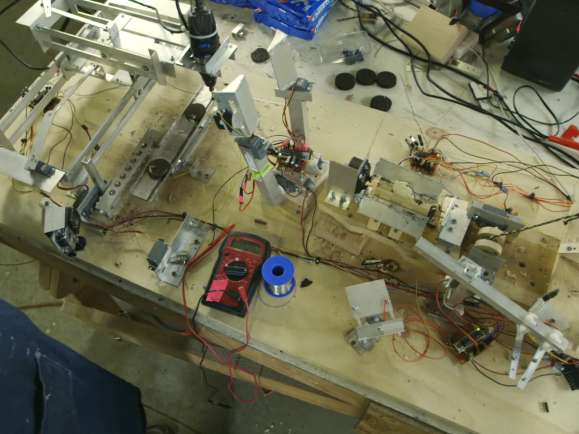
Look, we understand the need to find a project to occupy your time and interest. So we’re not going to ask the wrong question (why?) for this one. This guy hates the creme that connects the chocolate cookies to make an Oreo. So he built a complicated system to separate the cookies and remove the creme. Check out the video after the break for a hardware overview (where we catch a glimpse of an Arduino RBBB) and a complete demonstration.


Although the project is a marketing gimmick for the company, we really love the fun they had making the video and the device actually works! Drop a cookie in the chute and it will be lifted into position for cleaving with a hatchet (we’re unsure what the string mechanism on the hatchet is for). The two pieces are then grabbed by some servo-powered grippers and transferred to a CNC router bed where a Dremel tool removes the residual creme before dumping the cookies out into your hand.


Once again, marketers should take note of this style of advertising. Notice the two main features achieved here: including a product in something we’re genuinely interested in and not being annoying (we’re looking at you Head-On).


[via Reddit]


Filed under: cnc hacks


via Hack a Day http://hackaday.com/2013/03/01/oreo-creme-hater-builds-rube-goldberg-cnc-router-to-remove-the-stuf/?utm_source=feedburner&utm_medium=feed&utm_campaign=Feed%3A+hackaday%2FLgoM+%28Hack+a+Day%29

Wooden LEGO Bricks

Wooden LEGO Bricks

Japanese company Mokulock makes eco-friendly wooden versions of the famous LEGO bricks.


-- Delivered by Feed43 service


via Design Ideas and Tech Concepts - Toxel.com http://www.toxel.com/tech/2013/02/26/wooden-lego-bricks/

2013-03-03

Money Sculptures

Money Sculptures

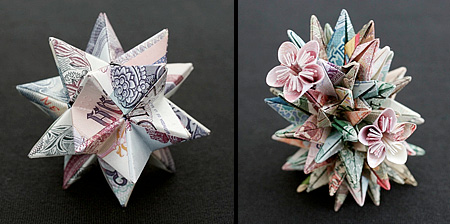
Canadian artist Kristi Malakoff makes unique sculptures out of real money.


-- Delivered by Feed43 service


via Design Ideas and Tech Concepts - Toxel.com http://www.toxel.com/inspiration/2013/02/20/money-sculptures/

Freezing Android to crack the encryption

frozen-phone-encryption-hacking


Build a better lock and someone will make a tool to open it without the key. Or in this case they’ve made a tool to discover the key using a trip to through the deep freeze. The Forensic Recovery of Scrambled Telephones — or FROST — uses cold temperatures and a custom recovery image to crack Android encryption keys.


Cold boot hacks go way back. They leverage use of low temperatures to slow down the RAM in a device. In this case, the target phone must already be powered on. Booting a phone that uses the encryption offered by Android 4.0 and newer requires the owner’s pass code to decrypt the user partition. But it then remains usable until the next power cycle. By freezing the phone, then very quickly disconnecting and reconnecting the battery, researchers were able to flash their own recovery image without having the encryption key cleared from RAM. As you can see above, that recovery package can snoop for the key in several different ways.


[Thanks Rob]


Filed under: android hacks, security hacks


via Hack a Day http://hackaday.com/2013/02/20/freezing-android-to-crack-the-encryption/?utm_source=feedburner&utm_medium=feed&utm_campaign=Feed%3A+hackaday%2FLgoM+%28Hack+a+Day%29

2013-02-27

Hjemmeautomasjon

I februar begynte jeg på et nytt prosjekt for å automatisere lys og varme i hele huset. Nå, omtrent et halvt år etter begynner det endelig å se ut som noe fornuftig også. Hadde fra før en hel haug med … Continue reading


via Shitprat.no http://shitprat.no/2012/12/19/hjemmeautomasjon/

2013-02-25

Nemi


-- Delivered by Feed43 service


via Nemi http://www.dagbladet.no/tegneserie/nemi/

2013-02-13

February 13, 2013


New WEEKLY WEINERSMITH!


via Saturday Morning Breakfast Cereal (updated daily) http://www.smbc-comics.com/index.php?db=comics&id=2886&utm_source=feedburner&utm_medium=feed&utm_campaign=Feed%3A+smbc-comics%2FPvLb+%28Saturday+Morning+Breakfast+Cereal+%28updated+daily%29%29

2013-02-02

Random image from fukung.net: cc478f94c5ef02bd02409efcdbeece7b.jpg


via Fukung.net most recently added pictures http://fukung.net/v/44425/cc478f94c5ef02bd02409efcdbeece7b.jpg

February 01, 2013


Oh man. We have something big to announce for the book. STAY TUNED GEEKS!


via Saturday Morning Breakfast Cereal (updated daily) http://www.smbc-comics.com/index.php?db=comics&id=2874&utm_source=feedburner&utm_medium=feed&utm_campaign=Feed%3A+smbc-comics%2FPvLb+%28Saturday+Morning+Breakfast+Cereal+%28updated+daily%29%29

2013-01-19

December 22, 2012


Big announcement!


via Saturday Morning Breakfast Cereal (updated daily) http://www.smbc-comics.com/index.php?db=comics&id=2832&utm_source=feedburner&utm_medium=feed&utm_campaign=Feed%3A+smbc-comics%2FPvLb+%28Saturday+Morning+Breakfast+Cereal+%28updated+daily%29%29

2013-01-12

Using a Commercial Dovetail Jig

dovetailDovetails have long been associated with quality woodworking and quality furniture. Dovetails look great and add a unique detail that shows the craftsmanship of the woodworker. Traditionally, dovetails were cut by hand using a back saw and a chisel, and in some cases a coping saw top help cut out the unused pieces. If you are a dedicated hand tool craftsman and or are a commercial woodworker and you can take the time to practice hand cutting dovetails, it is possible to get some amazingly accurate and beautiful results. If you are a some-times, novice or infrequent woodworker, cutting hand dovetails is something you may do very seldom so getting nice cut dovetails is much harder to do, and that is why a number of companies have developed and sell, jigs that can help those "infrequent" woodworkers in making quality dovetails.


Many of the commercial dovetail jigs are similar in their designs and in the way they operate. In most cases they will use a router with a dovetail bit fitted to it, and often these bits are included with the jig. Another thing in common with most of the commercial jigs is that they will only make what are called 1/2 blind dovetails out of the box, if you want to make Through dovetails you may need to purchase additional pieces for your jig. To see pictures of the difference between Through and 1/2 blind dovetails, see pictures further in the article.


via WoodWorkWeb - Woodworking Community http://www.woodworkweb.com/woodworking-videos/406-using-a-commercial-dovetail-jig.html

2013-01-10

What We Lack in a Hyperconnected World

Post written by Leo Babauta.

Is it strange that many of us these days feel hyperconnected and yet disconnected?


This is what Mark Sisson of Mark’s Daily Apple explores in his new book, The Primal Connection: Follow Your Genetic Blueprint to Health and Happiness. It’s a fascinating look at what we need as humans, what we lack in this age of distractions and speed.


Mark published The Primal Blueprint a couple years ago, and this new book looks like it builds on top of that. In this interview, Mark answers some key questions about what we lack in a hyperconnected world.


Q: How is The Primal Connection different from The Primal Blueprint?


Mark: The Primal Blueprint focused almost entirely on the evolutionary underpinnings of proper human nutrition and exercise. In short, as animals, we function best eating the diet and doing the exercises that humans evolved eating and doing, so an evolutionarily concordant diet and exercise plan is a good place to start a healthy lifestyle.


The Primal Connection is about all the other environmental and social factors that shaped who we are today as a species. It’s about how sun exposure and proper sleeping patterns are absolutely critical for optimal health. It’s about the importance of real social contact with other humans, face to face – not through words on a screen. It’s about adopting and adapting all the other behaviors of our ancestors that made them healthy, because it all shaped our evolution – just as the ancestral diet and exercise habits did. In short, if The Primal Blueprint was primarily concerned with the body as a meat vessel requiring certain dietary inputs, The Primal Connection explores the body as a mind and emotion meat vessel requiring certain social, environmental, sensual, and sensory inputs for optimal functioning.


Q: What’s the most glaring deficit in the modern human psyche?


Mark: A lack of mindfulness. It’s ironic, because we’re inundated with information, data, and knowledge that purports to fill our brains. Everything you could ever want to know about anything is right there at our fingertips.


But what’s really going on? What are you missing with your face buried in that smartphone?


We’re so focused on devouring the latest gadget or article or Tweet and moving on to the next one that we’re never really “here.” We’re like the NFL receiver who starts his fake-out move before he catches the ball and ends up dropping it. Before we’ve even perceived, noted, appreciated, and fully experienced the sensory and emotional input that make up everyday experiences, we’re moving on to the next thing.


The present is, by definition, extremely fleeting – here in an instant, gone in a second. But it’s also all we truly have. The future is “out there” and the past is “back there”; the present is right here. If we want to experience the present in any meaningful way, we have to be mindful of it. We have to consciously and diligently (at least at first, until it becomes second nature) stop, smell the roses, and then ruminate on what we’re smelling.


Q: What’s the most glaring deficit in the modern human body?


Mark: A lack of physical touch. Humans are social animals, as people often like to say. social contact between humans should not be sterile and stand-offish. Most social animals spend much of their days touching other members of their group. They sleep together, groom each other, wrestle with each other, and sniff each other. They need constant physical touch, and, because they’re not beholden to social norms, they get to satisfy that need.


Humans are also social animals who need physical touch, but social contact between humans tends to be sterile and stand-offish. It’s too bad, because physical touch has immense physical and mental benefits. Quite literally, the welcome touch of another person – a hug, a kiss, a massage – enacts beneficial changes in gene expression at the molecular level, changes that reduce stress, release oxytocin, and lower inflammation. Babies who experience “touch deficit” have disrupted growth hormone, stress hormone, and bonding hormone secretion.


When you see your friends, hug them. Dads, hug your children. Pet owners, pet your dog and scratch your cat behind the ears. After all, you’re their family, and they may not have another outlet for touch.


Oh, and people: have sex. Often, and with someone you care about. Sex feels good, strengthens bonds, improves our immune system, and may even boost growth in the neurocampus.


Q: What is one quick tip that anyone can do to better align the expectations of their genes with the realities of modern life?


Mark: Make the effort to really disconnect from electronic stimulation at least twice a day. No phones, no computers, no Facebook, no email, no television. This sounds scary and hard, but there are a few simple ways to go about doing this.


Go for a walk on your lunch break and leave the smartphone at the desk. Just walk, preferably through a place with some greenspace.


Set a tech cut-off time before bed. Shoot for at least an hour before you go to sleep, but strive to extend that period to two hours.


Turn your phone off when you’re with people. It used to be that only old couples who’d been together for fifty years would be out to breakfast with their noses buried in their respective newspapers, but now everyone’s doing it. The oldsters earned the right, because they’ve lived life, but the 22 year old out with his buddies? I think it’s a shame that he can’t find anything more interesting than his phone.


Q: What don’t we get enough of, and why is it such a problem?


Mark: Play. People don’t play enough.


It’s funny, because when I talk to people, I find that playing is the hardest hurdle to overcome. How’s that? Play is, by definition, fun. Why wouldn’t you love to do more of it?


Play isn’t fun when you feel guilty or self-conscious about it. It’s not play if you’re holding back and looking around to see who’s pointing and laughing at you. Play must be carefree. For it to really “count,” play must be free. You have to commit to it. You can’t go out and begrudgingly toss the Frisbee around. Your body knows the difference; it can’t be tricked that easily. You have to really play. You have to give yourself over to the moment (remember, be here now).


The people you’re with also know the difference. If you’re outdoors tossing a ball with your kid (or even your dog) and you can’t help but gaze into the soulful eyes of your iPhone every minute, whomever you’re with will know that you’re not really playing with them. That you’re not really engaged in the activity. And that’s not playing. That’s acting.


Be a kid again. A kid who pays the bills, takes care of responsibilities and duties, and knows when to buckle down and do the things that matter, but a kid nonetheless.


Mark Sisson’s new book The Primal Connection was released today. Visit MarksDailyApple.com to see how you can get a bunch of free gifts for ordering a copy today.


via zenhabits http://zenhabits.net/primal/

12 Rules to Live By

Editor’s note: This is a guest post from Craig Ballantyne of The $100K Transformation Contest.

The one thing I admire about people who have strong nutrition beliefs is their dogmatic behavior.


For example, a vegetarian, under no circumstances, will ever eat meat. There is no, “well, everyone else is having a burger, so just this once, I will too.”


That’s not how it works.


Not when a vegetarian has a strong personal philosophy that they never, ever, ever eat meat.


And that strong personal philosophy guides them to guilt-free behavior that is congruent with their goals.


I’ve also taught my fat loss clients to develop their own personal philosophy – essentially a set of rules that dictate decisions, and I’ve also created my own rules that determine how I live my life so that I reduce guilt, stress, and wasted emotional energy.


Now the purpose of this email is not to say that my personal philosophies are wrong or right.


Instead, they are simply here to encourage you to adopt your own rules for the sake of living a better, more productive stress free life. 
You may have your own rules in your head, but I encourage you to put them in writing. And you can adopt a set of rules for every aspect of your life, from health to financial to family and business.


Craigs 12 Rules


These are the 12 rules I live by:


  1. I go to bed and get up at the same time 7 days per week (9 p.m. and 5 a.m.) I do not deviate from this schedule unless it is due to an important (and this word is not used lightly) work or social function. I stick to a diet of whole, natural foods, avoid caffeine after 1 p.m., and avoid alcohol within 3 hours of bedtime.

  2. I write for at least 60 minutes first thing every morning.

  3. I do not check email before 9 a.m.

  4. I do not talk on the phone unless it is a scheduled interview or conference call.

  5. I create a to-do list at the end of every workday and I follow that to-do list starting first thing the next morning. I also perform my daily readings at the end of every workday, and I write in a gratitude journal. I am thankful every day for identifying my mission and what I wanted to do with my life at such a young age.

  6. I do not engage in confrontations with anyone, in-person or online. This is a waste of time and energy. If I have caused harm, I apologize and fix the situation. However, if someone simply doesn’t like something I have done or something that I do or disagrees with me, that is fine, but I’m not going to get into an argument about it. For any confrontation-like situation, I simply take a deep breath, relax, breathe out, and re-focus my efforts back on my work and goals.

  7. I am guided by these two phrases: a) “Nothing matters.” – By this, I mean that arguing on the internet changes nothing, I can only work towards the major, massive goals that I have set for my life…that I have a vision of helping others, and there is no time to let petty arguments stand in the way. b) “It will all be over soon.” – This serves me in both good times and in bad.In hard times, such as bad days, troubled times, or intense physical effort or discomfort, I know that it will all be over soon. A small amount of suffering now will be forgotten later when I will enjoy the rewards of my work. And in good times, I will remember that life is short, and I must make things count now, and no matter how good things are going I must never let myself become soft and lazy, because I have too much to accomplish in such a short time.

  8. Everything that happens to me – good and bad – is my personal responsibility. I blame no one but myself. These are the choices I’ve made – this is the life I’m living. I will accept the consequences of my actions.

  9. I will not stop until I have helped 1 Million men and women transform their lives – physically, financially, or emotionally.

  10. I will not be a person I don’t want to be. I will not be petty, jealous, or envious, or give in to any other of those lazy emotions. I will not gossip or speak badly of others, no matter who I am with or what environment I am in. I will not be negative when it is easier to be positive. I will not hurt others when it is possible to help. I will know the temptations, situations and environments in life that I must avoid, and I will, in fact, avoid them, even if it means loosening relationships with others who “live” in those environments. It’s my life and that matters more than what other people think of me.

  11. “I will always keep the child within me alive.” – Frank McKinney. I will laugh every day. That’s not hard when you have the friends – and dog – that I have. And if they don’t make me laugh, there’s plenty of comedy on Netflix.

  12. “I will write with honesty and feeling.” – Ted Nicholas. I’ve long since giving up caring about how others choose to judge me. What matters more than others’ opinions is the number of people that I can help by sharing advice and encouragement in my writing. The most powerful songs are written by songwriters who bare their souls. So screw it, let’s do it. Let’s put it all out there. I’m not going to help as many people as I could if I keep the “real info” to myself. I also understand now, better than ever, that sometimes you have to “write to repel” in order to strongly attract the readers you desire.


So that’s it. These 12 rules allow me to live my life with less guilt, more energy, and more productivity than if I did not have these personal philosophies outlined.


Now I know there will be two types of reactions to this content. First, some will dismiss it – and dismiss me.


But to those people, remember the point of the list is not for you to sit there and think, “Oh, what a total weirdo. I never want to hang around with this guy.”


Instead, the point of the list, the idea, the article is to simply stimulate your thinking.


And that’s the 2nd type of reaction you can have to this article.


This is the reaction of the people who I’m interested in – the people who will realize what’s holding them back is not a lack of knowledge (because the knowledge is out there and freely available), but instead, it is decision making.


Listen, I know that every week you make decisions that leave you full of guilt and remorse, but on the other hand you also make decisions that you know are correct – even though they are difficult to make.


Wouldn’t you be better off if you made MORE correct decisions with less effort?


Of course, and that is where you rules to live by, your personal philosophies, come into play.


With this post, I’ve given you a model so that you can create your own personal philosophies that will allow you to make the correct decision and fewer decisions that leave you with remorse.


As a result of making more correct decisions, you’ll move closer to your goals and suffer less frustration. Life will be simpler once you start adhering to your own personal philosophies – and not worrying about what others think.


Check out more from Craig Ballantyne in his $100K Transformation Contest, and sign up today (it’s free).


via zenhabits http://zenhabits.net/12rules/

2013-01-08

The Other Person is Never the Problem

Post written by Leo Babauta.

In countless little ways each day, we blame other people for our frustrations.


They irritate us, don’t do things the right way, are incompetent, rude, inconsiderate, bad drivers, too slow, not tidy, boring, uncaring.


And yet, we will always be frustrated if we stick to this mindset.


We will always be angry, offended, hurt, disappointed. There will be no end to the offenses humanity can take against us, as long as we decide that everyone else is wrong, all the time.


They’re not the problem.


The other person is never the problem.


This is a lesson I learned from Charlotte Joko Beck in her book, Everyday Zen. The problem is our reaction. The external event (someone is rude to you) will always happen, every day, often multiple times a day. We cannot stop others from being rude — but we can change how we react.


If we can react in a calmer, more peaceful manner, we will be happier. We will then act in a more compassionate way, smile, and perhaps the other person will be transformed just a little bit by this act of compassion.


Here’s a short guide to reacting peacefully:


  1. When you notice yourself getting offended, frustrated, angry, irritated, disappointed … pause. Take a breath.

  2. Don’t act. Acting in anger is harmful.

  3. Examine the idea you have about how they should act. You are holding onto this idea, and it is in conflict with reality. As long as you hold onto fantasies that aren’t in line with reality, you will be frustrated. Try changing all of reality to match your expectations — let me know when you finally succeed.

  4. Toss your expectation into the ocean.

  5. Smile. Accept the person in front of you, and yourself, as a flawed human.

  6. Act with compassion. When you stop blaming the person for not acting perfectly, you can then respond appropriately, and with compassion. Accepting reality doesn’t mean you don’t take action — it just means you let go of the frustration. Instead, you can act appropriately, and be more centered in your actions.


Question: What if people you rely on are careless or irresponsible? Aren’t they the problem, then? Yes, the other person is careless or irresponsible. And this is reality — it will always be this way. You can’t change that, and so the question is, how will you deal with it? You can rage and get mad at them, or you can let go of expectations, breathe, and act appropriately within this reality.


Toss your expectations into the ocean, smile, and act with compassion. The other person, rude bugger that he is, will never see it coming.


via zenhabits http://zenhabits.net/gah/

2012-12-23

The Creative Secret Sting Uses To Write New Songs


Semantic intuition is responsible for any number of creative works--including much of Sting's repertoire, the movie "The Princess Bride," and "The Odd Couple." Use this brainstorming technique to improve your creativity and power innovation.


Does Sting have a creative secret for writing a hit new song? Is there a trick Neil Simon uses to get ideas for plays? How about a creative strategy screenwriter William Goldman (of Butch Cassidy and the Sundance Kid fame) might use to find inspiration for a new novel or movie? Turns out they have all used a version of a group brainstorming technique known as "semantic intuition," the creative technique we use to help our Fortune 500 clients create their next breakthrough product or award-winning promotion.


The oddly named, but extraordinarily powerful technique was invented by Helmut Schlicksupp, an employee of the Battelle Corporation’s office in Germany. Semantic intuition is a word-combination technique where brainstormers name an idea first, and then try to figure out what the new idea might be, given its name. As counterintuitive or even as impossible as this group idea-generating strategy might sound, there’s actually a precedent for it in the creative arts.


Read Full Story


via Fast Company http://www.fastcompany.com/3003864/creative-secret-sting-uses-write-new-songs?utm_source=feedburner&utm_medium=feed&utm_campaign=Feed%3A+fastcompany%2Fheadlines+%28Fast+Company%29